
Blog
How to Remove Nose & Chin Blackheads Painlessly at Home

Have you ever stood in front of the vanity mirror getting ready for a special event, leaned in close to apply your foundation, and felt your entire mood collapse because all you could see were tiny dark dots scattered across your nose? Or maybe after washing your face at night, you ran a fingertip over your chin, and instead of soft, velvety skin, you felt rough, bumpy white grains prickling under your touch?
It is intensely frustrating. And let’s be completely honestwhat is the very first instinctive mistake almost all of us make?
We stand right in front of that mirror, dig our fingernails and thumbs aggressively into our skin, and squeeze with all our might! Our eyes water from the sharp sting, our nose turns bright inflamed red, and after all that agony, the stubborn core still breaks halfway inside. The next morning, instead of a clean nose, we are left with a raw abrasion that heals into a dark, persistent hyperpigmentation mark lasting for months.
Some people resort to commercial black peel-off strips, ripping them off with an excruciating tug that feels like peeling off the epidermal layer itself only to find that within forty-eight hours, the blackheads are right back where they started!
If you are exhausted by painful pinching, skin tearing, and wasting money on aggressive treatments, this comprehensive guide is your gentle, skin-saving answer. Today, we will explore how to treat pores with physiological respect and melt stubborn sebum plugs like soft butter using simple, authentic botanical staples found right in your kitchen.
What Actually Are Blackheads and Whiteheads? (The Underlying Biology)
No skincare remedy works long-term unless you understand the biological process creating the problem. A common misconception is believing that blackheads are particles of environmental dirt or street dust, which leads people to vigorously scrub their noses with harsh alkaline bar soaps four times a day.
Blackheads and whiteheads have nothing to do with external dirt:
Our face features areas with a dense concentration of sebaceous glands most notably the T-Zone (forehead, nose, and chin). These glands produce natural lipid secretions (sebum) designed to lubricate and shield the skin barrier. When excessive sebum blends with shedding dead skin cells (keratinocytes), it congeals inside the follicular canal.
Depending on whether the pore opening remains covered or exposed, two specific conditions develop:
-
Whiteheads (Closed Comedones):
When this hardened lipid plug sits trapped beneath a microscopic, intact layer of skin cells, air cannot penetrate. It remains a firm, pale, whitish bump under the surface.
-
Blackheads (Open Comedones):
When the follicular pore remains dilated and open at the surface, the trapped sebum plug is exposed to atmospheric oxygen. Just like an open apple slice turns dark brown when exposed to the surrounding air, the lipid plug undergoes oxidation, turning black or dark grey.
The takeaway is straightforward: blackheads are solidified, oxidized lipid plugs, not accumulated grime. You cannot dig out or scratch away solidified fats with fingernails without tearing your skin; you must soften, melt, and gently draw them out.
The 3-Step Painless Botanical Extraction Routine
This tested routine focuses on pore relaxation, gentle surface absorption, and subsequent pore toning without causing mechanical trauma.
Step 1: Soften the Solidified Sebum (Gentle Steam Compress)
You cannot expect a hardened wax-like sebum plug to release while the pore opening is rigid and tight. Mechanical force here will only bruise capillary vessels.
You do not need a costly facial steamer or salon gear for this:
-
Pour warm water into a clean bowl. Ensure the water temperature is comfortably warm to the touch never boiling or scalding.
-
Toss in a pinch of crushed fennel seeds or 3 to 4 fresh mint leaves. Mint contains natural menthol that provides an immediate soothing, anti-inflammatory sensation to the skin.
-
Immerse a clean, soft cotton cloth or small washcloth into the water and wring out the excess liquid completely.
-
Rest the warm, damp cloth over your nose and chin for 3 to 4 minutes. As it begins to cool, re-dip it into the warm water, wring it out, and lay it back over the skin.
The Scientific Effect:
The mild heat and humid condensation liquefy the viscous fats inside the follicular opening and relax the surrounding keratin, allowing the pore walls to yield freely.

Step 2: Draw Out Impurities with a Non-Abrasive Botanical Paste
Put away aggressive walnut shell powders and coarse granulated scrubs! Hard granules cause microscopic tears on delicate nose skin, dilating pore diameters permanently.
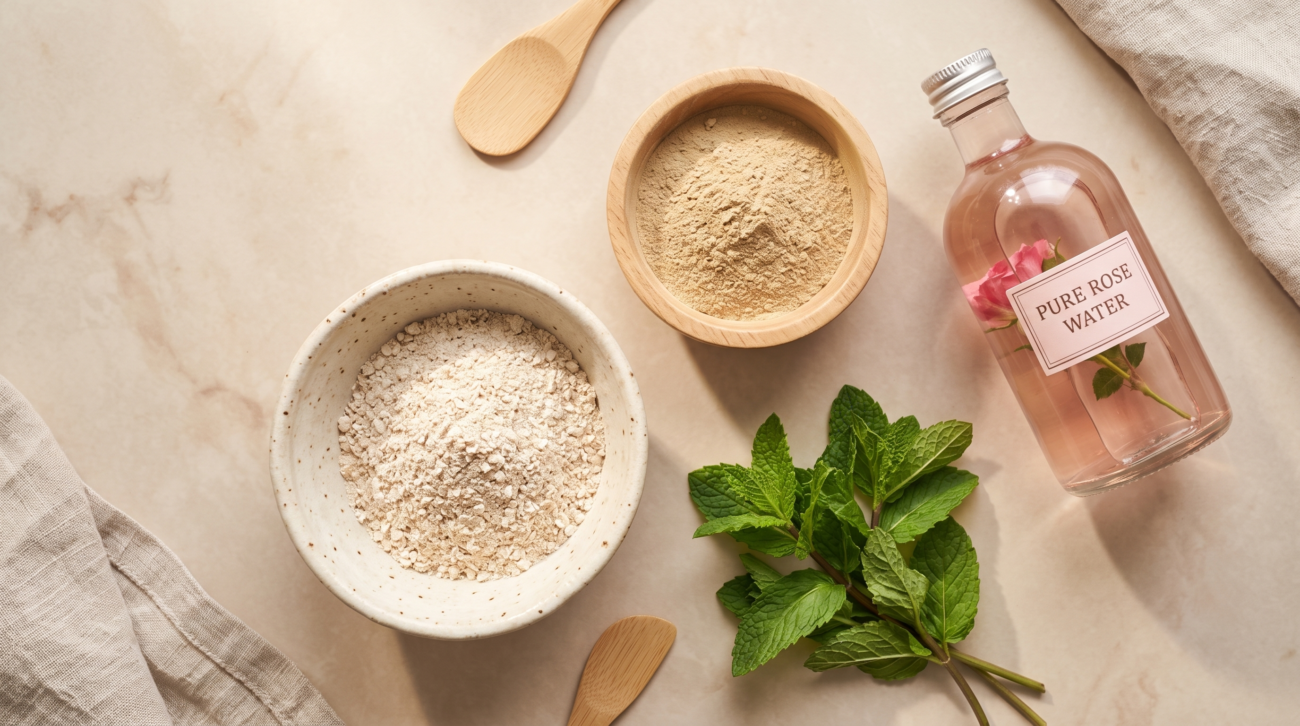
Instead, prepare this balanced three-ingredient botanical clay-paste:
| Active Ingredient | Ideal Quantity | Skin Function & Mechanism |
| Finely Ground Colloidal Oatmeal | 1 Tablespoon | Ground in a clean blender into a silky flour. Contains natural saponins that bind to impurities without stripping the lipid barrier. |
| Multani Mitti (Fuller’s Earth) or Rice Flour | ½ Teaspoon | Functions like a microscopic magnet, electrostatically drawing out liquefied sebum and surface residues. |
| Pure Distilled Rose Water or Raw Milk | As needed to mix | Use pure rose water for oily, inflamed skin; use raw, unboiled milk (lactic acid) for dry or sensitive complexions. |
Precise Application Instructions:
-
Whisk the ingredients into a smooth, thick spreadable paste.
-
Smooth the mixture evenly across your nose, nasal creases, and chin.
-
Using only the soft pads of your index and middle fingers, glide across the skin in slow, gentle circular motions for just 30 seconds as delicately as touching an infant’s cheek. Do not scrub or exert downward pressure.
-
Allow the paste to rest undisturbed on the skin for 5 to 7 minutes.
-
When it feels semi-dry (not bone dry or cracked), rinse it clean with lukewarm water using soft splashes.
When you pat your skin dry and run a clean finger across your nose, you will feel smooth skin without raw redness or throbbing pain.
Step 3: Tighten and Refine the Follicular Openings (Pore Contracting)
This is the vital phase that many skip, only to wonder why their blackheads return within a few days.
Once the congealed sebum is dissolved and washed away, the follicular canal remains empty and expanded. If left uncovered and untoned, sebum production and airborne oxygen will refill and oxidize the canal within 24 to 48 hours.
Contract the pores using one of these two natural toning methods:
-
The Cotton-Wrapped Ice Press:
Take a fresh ice cube from the freezer and wrap it inside a thin, clean cotton handkerchief (never apply bare ice directly to your facial tissue, as it can cause cold burns and broken capillaries). Gently press and glide the wrapped cold compress across your nose and chin for 30 to 40 seconds. The sudden drop in temperature causes instant vascular and tissue contraction, snapping dilated pore rims shut.
-
Chilled Pure Rose Water:
If your skin is sensitive to intense cold, keep your spray bottle of pure rose water inside the refrigerator. Soak a soft cotton round with the chilled floral water and sweep it across your treated areas. Rose water acts as a gentle astringent that re-establishes natural epidermal pH.
In this detailed Urdu video presentation, every step is demonstrated in close detail, showing you practical adjustments for your specific skin type.
Critical Habits to Avoid If You Want Clean Pores
-
Never Use Metal Extraction Loops or Tweezers: Comedone extractor tools exert crushing focal pressure. They fracture fragile sub-dermal capillaries, leading to permanent spider veins and indented ice-pick scarring.
-
Stop Stripping Your Skin with Harsh Soaps: Stripping your facial skin bone-dry sends panic signals to your sebaceous glands. In defense, the glands trigger compensatory hyper-seborrhea, producing twice as much sebum as before!
-
Sleeping in Sunscreen or Primer: Heavy silicones and chemical sunscreens bond tightly to sebum. Skipping double cleansing before sleep leaves those components to coagulate in your pores overnight.
Comprehensive Frequently Asked Questions (SEO FAQs)
Q1: How often should I perform this botanical blackhead removal routine?
A: This is not a daily treatment. For normal to combination skin, once a week is plenty. If your skin is excessively oily or your T-zone is heavily congested, you may perform it twice a week at most. Over-treating can deplete natural skin lipids and irritate your moisture barrier.
Q2: Can I apply foundation or compact powder immediately after this process?
A: Avoid applying decorative makeup right after unclogging your pores. The follicular channels are fresh and newly purified; applying powdery silicones, synthetic pigments, or heavy oils immediately will push cosmetics directly into empty openings, causing immediate re-clogging. It is best to perform this routine during your evening self-care session so your skin can rest, re-balance, and settle overnight.
Q3: Why are peel-off pore strips considered harmful by skincare specialists?
A: Pore strips rely on industrial-strength adhesives. When ripped away, they pull out superficial sebum, but they also yank out healthy microscopic vellus hairs, rip away natural protective lipids, and stretch out the elastin fibers supporting the pore opening. With regular use, the pores lose their structural elasticity and remain permanently enlarged.
Q4: Can facial pores ever be permanently removed or deleted?
A: No. Pores are living anatomical channels through which perspiration and necessary sebum reach the exterior world to protect your skin barrier. They do not contain muscles, meaning they cannot physically “open” and “close” like windows, nor can they be eliminated. However, by clearing out compacted debris and maintaining elastic collagen walls through proper toning, pores shrink down so significantly that they appear virtually invisible.
Q5: What can I substitute if I don’t have colloidal oatmeal or Multani Mitti?
A: If you run out of colloidal oatmeal, you can substitute pure chickpea flour (besan). Chickpea flour has been used for centuries across South Asia as a soothing, oil-balancing, and skin-softening wash. Simply pair it with a pinch of rice powder to recreate that gentle magnetizing and cleansing effect.
Q6: Can men also use this routine for nose blackheads?
A: Absolutely. Male skin generally produces higher levels of sebum under androgenic influence and has wider follicular openings, making men particularly prone to prominent oxidized plugs. This 3-step routine works exceptionally well for men’s skin without causing redness or post-shave irritation.
Q7: What is the main difference between treating blackheads versus whiteheads?
A: Because whiteheads are trapped under a microscopic closed layer of skin, they often take slightly more time to soften than open blackheads. The warm compress step is especially crucial for whiteheads to hydrate and soften that top stratum corneum layer, enabling the oatmeal and clay paste to absorb the trapped sebum beneath it without physical popping.
Q8: Will drinking more water or changing my diet stop blackheads completely?
A: While proper internal hydration and reducing high-glycemic, refined sugary foods help regulate sebum viscosity and lower inflammation, blackheads are primarily a topical follicular issue driven by natural cell shedding and surface sebum interaction. Diet helps support balance, but topical botanical maintenance remains essential.
Q9: Can someone with dry or flaky skin still develop blackheads?
A: Yes! Even if your cheeks and perimeter feel parched, the central T-zone can still produce localized sebum. Dry, flaky dead skin cells can crumble into pore openings and seal off sebum pockets. If you have dry skin, always use raw milk instead of rose water to mix your paste so the natural lactic acid gently dissolves dry flakes while milk fats hydrate the surface.
Q10: How long does it take to see visible results from this routine?
A: You will notice a dramatic difference in tactile smoothness immediately after the very first application—the rough, sandy texture across your nose and chin will be largely gone. For stubborn, deep-seated blackheads, consistent weekly application over 3 to 4 weeks will steadily clear the channels and visibly minimize the look of enlarged pores.
Healthy, glowing, and velvety-smooth skin is never achieved through harsh friction or aggressive extraction; it is cultivated through patience, regular hygiene, and gentle botanical care that works in harmony with your skin’s biology.
Do you struggle more with stubborn blackheads on your nose, or bumpy whiteheads along your chin? Share your personal experience in the comments below I read and reply to your questions to help you tailor your natural routine!