
Blog
Winter Hair Care: Science-Backed Remedy for Dry Scalp & Breakage

The Complete Scientific and Botanical Guide to Winter Hair Care: Eradicate Dry Scalp, Dandruff, and Severe Breakage
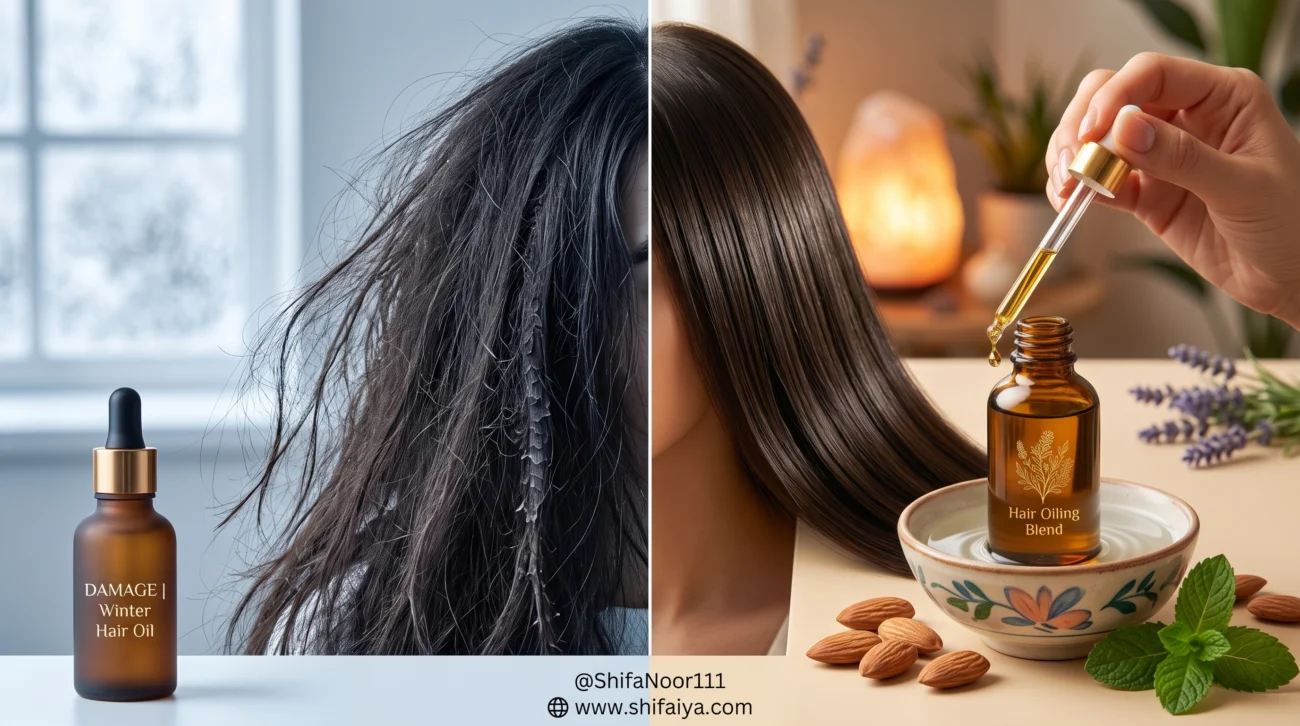
The moment the first crisp winter breeze arrives, the weather becomes invigorating—yet our hair often tells a completely different story. Before long, our strands start resembling dry, brittle straw. When we run a comb through our hair, instead of smooth gliding, we hear a sharp snap as strands snap right in the middle. We avoid wearing dark clothing because unsightly white flakes shower down onto our shoulders, and our hair feels so dehydrated and coarse that styling it feels nearly impossible.
And what is the instinctive, almost universal reaction most of us have?
Seeking comfort from the morning chill, we stand directly under the shower and pour scalding hot water straight over our scalp. Then, rushing to undo the damage, we slather chilled, congealed coconut or mustard oil over the dry scalp!
The result? The hair becomes even stiffer, shedding accelerates, and breakage multiplies threefold.
If you are dealing with brittle ends, flaky build-up, and hair fall this winter, step away from aggressive salon chemicals and scalding showers. In this comprehensive guide, we will unpack the physiological mechanics of what winter air actually does to your hair fiber and explore an authentic, kitchen-based botanical regimen to restore silkiness, elasticity, and shine.
The Biological Science: What Winter Air Actually Does to Your Hair
To treat seasonal damage effectively, you must understand the microscopic architecture of the hair shaft.
Every individual strand of hair is structured much like a biological fiber surrounded by a protective sheath of overlapping shingles, known scientifically as the Cuticle. Under balanced conditions, these microscopic cuticle scales lie flat and compact. They lock in natural moisture within the inner cortex, reflect ambient light to create healthy luster, and ensure hair strands glide against one another without friction.
During winter, a destructive two-fold stress occurs:
-
Relative Humidity Depletion: Freezing outdoor air holds virtually zero ambient humidity, acting like an osmotic sponge that leaches moisture straight out of your exposed hair shafts.
-
Thermal Lipid Stripping: Pouring steaming hot water directly over your head melts and strips away the scalp’s protective acid mantle and natural lipid barrier (sebum).
When the natural sebum barrier is stripped and moisture evaporates, the cuticle scales lift, flare, and crack open. The hair shaft turns porous, resembling dry, untreated wood. The moment a dry, rigid strand bends under a brush or collar, it snaps instantly.
This is why winter hair care is not just about applying oil; it requires balancing Internal Hydration (Water-binding Humectants) with Lipid Sealing (Emollient Occlusives).
The 3-Step Botanical Protocol for Winter Hair Recovery
Step 1: Optimize Water Temperature (The Lukewarm and Cool Rinse Technique)
Your daily wash temperature is the foundation of winter hair health. Scalding water triggers thermal inflammation across the scalp epidermis, leading to itching, erythema, and reactive flaking.
-
The Correct Cleansing Temperature: Use warm water for your body, but cleanse your scalp strictly with lukewarm water water that feels neutral and gentle to the back of your hand.
-
The Cuticle Sealing Finish: Right before stepping out of the shower, perform a final rinse using cool (room-temperature) water for just 15 to 30 seconds. This brief temperature drop contracts the raised cuticle layers, flattening them tight against the cortex and locking in hydration.
Step 2: The Deep Moisture-Lock Hair Mask (Yogurt, Aloe Vera, and Raw Honey)
Applying raw oil to desiccated, dehydrated hair does not moisturize it; oils are occlusives that hold existing moisture in, but they cannot introduce water into dry strands. You must first infuse the core with biological hydration.
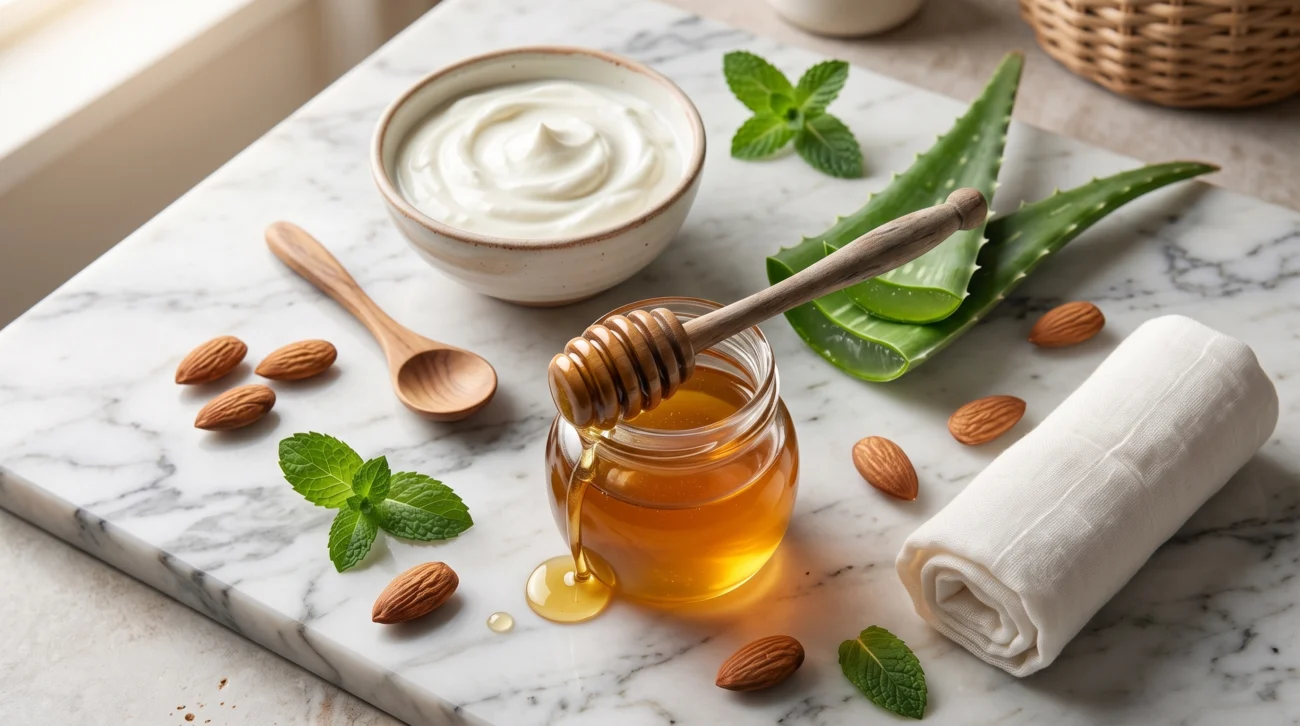
Prepare this active three-ingredient kitchen mask:
| Natural Ingredient | Recommended Quantity | Biological Mechanism & Benefit |
| Fresh Plain Yogurt | 3 to 4 Tablespoons | Rich in natural lactic acid (AHA) to gently dissolve flaky dead skin cells without scrubbing; supplies milk proteins to fortify the cortex. |
| Fresh Aloe Vera Gel | 2 Tablespoons | Composed of 99% pure structured water, polysaccharides, and vitamins to deeply quench parched keratin fibers. |
| Pure Raw Honey | 1 Teaspoon | A natural humectant that electrostatically attracts ambient water molecules and binds them inside the hair cuticle. |
Application Method:
-
Whisk the ingredients thoroughly in a ceramic bowl until smooth and lump-free.
-
Section your hair and gently coat from the scalp roots down to the fragile ends.
-
Leave the mask on for 30 to 40 minutes under a shower cap to trap natural body warmth.
-
Rinse thoroughly with lukewarm water followed by a gentle, sulfate-free herbal cleanser.
Once your hair air-dries, you will immediately notice the coarse, straw-like stiffness replaced by a soft, fluid bounce.
Step 3: Warm Botanical Oil Massage (The Thermal Seal)
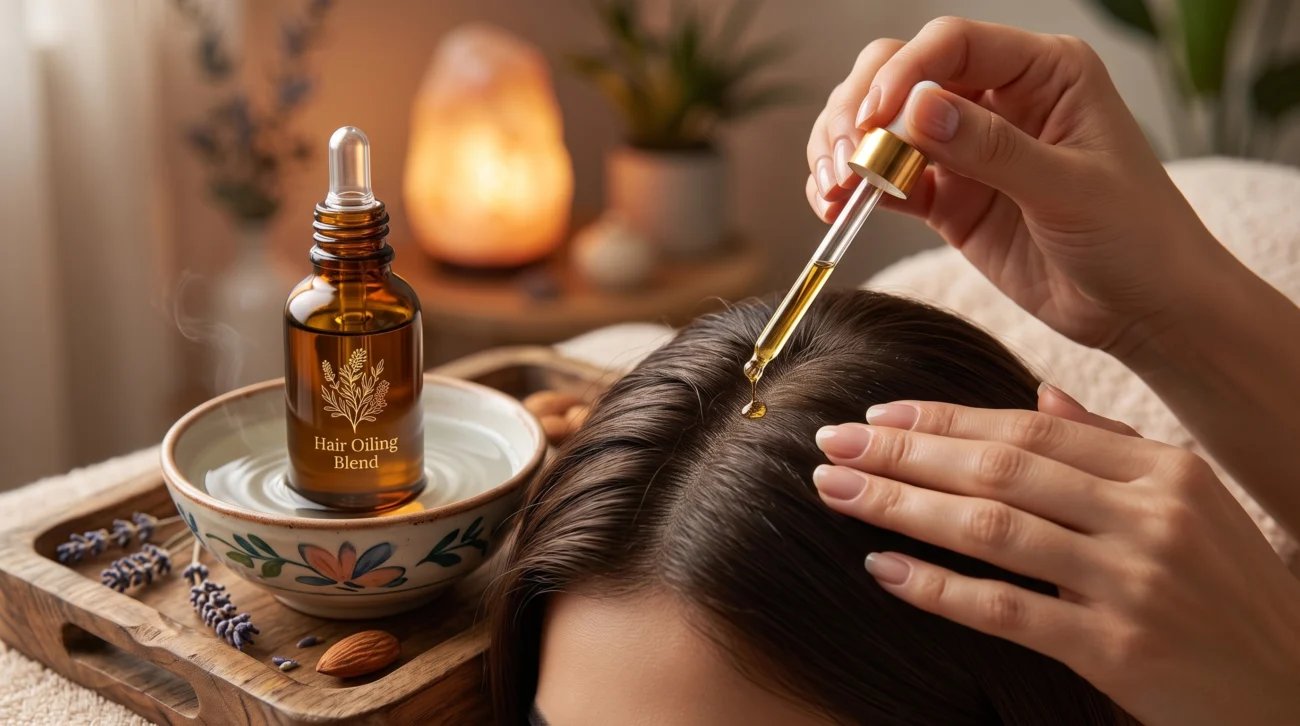
Once your strands are infused with natural humectants, you need a warm botanical oil layer to seal the cuticles and shield them against freezing outdoor drafts.
Never apply refrigerated or congealed oil directly onto cold scalp tissue; cold oil constricts microcapillaries and sits heavily on pore openings without absorbing.
-
The Double-Boiler Warming Method: Take 2 tablespoons of cold-pressed sweet almond oil, virgin olive oil, or black seed (kalonji) oil in a small glass container. Place that container inside a shallow bowl filled with boiling hot water for 2 minutes. Never heat cosmetic oils directly over an open flame, as extreme heat denatures delicate essential fatty acids.
-
The Gentle Scalp Stimulation: Part your hair in clean sections and apply the tepid oil using only the soft pads of your fingertips. Massage in slow, circular motions for 5 to 10 minutes to promote local blood flow.
-
Optimal Timing: Apply the warm oil 1 to 2 hours prior to washing. Avoid leaving heavy oils on your scalp overnight during winter, as excessive oil duration creates an anaerobic environment where opportunistic fungal spores flourish.
Note: This tutorial is narrated in clear, friendly Urdu, breaking down every single step with close-up demonstrations so you can easily replicate the routine at home.
3 Critical Winter Mistakes That Accelerate Hair Breakage
-
Vigorously Rubbing Wet Strands with a Terrycloth Towel: Wet hair swells, stretching its keratin chains into a fragile state. Aggressive towel friction shears raised cuticles, causing mid-shaft snapping. Always blot and squeeze damp hair gently using an old cotton T-shirt or a microfiber towel.
-
Drastically Reducing Your Daily Water Intake: When cold weather settles in, thirst sensations naturally diminish. However, systemic dehydration starves hair follicles from within. Maintain an intake of 6 to 8 glasses of room-temperature or warm water daily.
-
Friction from Coarse Wool Hats and Collars: Heavy woolen beanies and synthetic scarves create static electricity through continual mechanical rubbing, leading to stubborn tangles and split ends. Line your woolen winter hats with a soft silk or satin insert, or loosely wrap your hair in a silk scarf first.
Comprehensive Frequently Asked Questions (Detailed SEO FAQs)
Q1: What is the exact medical difference between a Dry Scalp and Fungal Dandruff?
A: This distinction is critical because treating one like the other can worsen symptoms:
-
Dry Scalp: Caused by lack of environmental moisture and stripped lipids. The flakes are tiny, dry, translucent or pure white, shedding easily like fine dust, accompanied by a tight, itching sensation across the scalp.
-
Fungal Dandruff (Seborrheic Dermatitis): Driven by an overproliferation of Malassezia yeast feeding on excess sebum. The flakes are large, yellowish, oily, and clumpy, adhering stubbornly to the scalp and hair roots with localized redness and persistent inflammation. Dry scalp thrives on gentle moisture and warm oils; fungal dandruff requires clarifying agents like yogurt, dilute apple cider vinegar, or neem tea rinses rather than heavy occlusive oils.
Q2: How many times a week should I wash my hair during the winter months?
A: Washing your hair 2 to 3 times per week is the sweet spot for most hair types in cold weather. Daily washing completely erodes the protective sebum layer, forcing the scalp into chronic dehydration. If you have fine or oily roots, washing every third day keeps the scalp clean without drying out the lengths.
Q3: Can I safely blow-dry my hair during winter?
A: If stepping out with damp hair into the freezing cold is unavoidable, blow-drying is acceptable provided you use the Cool or Low-Warm setting. Never blast wet strands with maximum heat; doing so boils trapped water inside the hair cortex, causing microscopic structural voids (bubble hair deformity) that snap easily. Keep the dryer nozzle at least 6 to 8 inches away from your hair.
Q4: Why is leaving hair oil on overnight discouraged during winter?
A: While leaving oil on overnight is a traditional practice, it can backfire in cold weather. Leaving heavy oils on the scalp for 8 to 10 hours traps ambient dust, dead skin flakes, and pillow debris against the follicular openings. Furthermore, it creates a lipid-rich, warm microclimate that encourages Malassezia fungal proliferation, leading to unexpected dandruff flare-ups. A 1- to 2-hour pre-wash warm oil treatment provides all the lipid penetration your roots need.
Q5: How do I stop split ends from traveling up the hair shaft?
A: Once a hair strand fractures into a split end, no topical product can biologically fuse it back together. The only permanent remedy is to cleanly trim off the split ends with sharp hairdressing shears. To prevent new splits, immediately establish a post-wash habit of sealing the bottom two inches of your damp ends with 2 to 3 drops of pure sweet almond or argan oil.
Q6: Can people with sinus issues or cold sensitivity safely use the yogurt mask?
A: Yes, with a simple adjustment. Never apply yogurt directly from the refrigerator. Bring the yogurt to room temperature before application. Alternatively, if you are prone to winter colds or sinus congestion, substitute the yogurt with pure fresh aloe vera gel blended with 1 teaspoon of raw honey and 5 drops of warm olive oil.
Q7: Which botanical carrier oils perform best in freezing weather?
A: Cold-pressed sweet almond oil, extra-virgin olive oil, and black seed (kalonji) oil are the undisputed champions for winter. They have rich concentrations of oleic acid, linoleic acid, and vitamin E that deeply nourish the hair shaft without solidifying. Pure unrefined coconut oil tends to freeze and harden at room temperature in winter; if you prefer coconut oil, always blend it half-and-half with almond or olive oil and warm it gently before use.
Q8: Will using honey in a DIY hair mask lighten my natural dark hair color?
A: No. While raw honey contains minute, trace amounts of glucose oxidase (which can produce microscopic traces of hydrogen peroxide under specific dilution and prolonged exposure), a 30-minute application blended with yogurt and aloe vera will not bleach or lighten your hair. Instead, it imparts a deep, glossy dimensional shine to dark hair.
Q9: How should I detangle winter hair to avoid excessive snapping?
A: Never drag a fine-toothed plastic comb through wet, vulnerable strands. Use a wide-toothed wooden or seamless neem comb. Start detangling at the bottom 2 inches of your hair to gently work out knots, and gradually work your way upward toward the crown. Wooden combs also neutralize static electricity, preventing frizz and flyaways.
Q10: How long does it take to see visible improvements from this botanical routine?
A: You will notice a marked improvement in hair softness and reduced surface frizz after the very first treatment. For persistent dry flaking and brittleness, adhering to this weekly hydration mask and warm oil routine for 2 to 3 consecutive weeks will fundamentally rehydrate the hair cortex and decrease mechanical breakage by up to 80%.
Important Safety Precaution (Patch Test Advisory)
Every person’s scalp microbiome, skin reactivity, and hair porosity are unique. If you have an active dermatological condition such as open scalp sores, severe cystic lesions, active psoriasis, or an undiagnosed rash avoid applying any topical formulation before consulting your healthcare professional. Always conduct a simple 24-hour patch test by dabbing a small amount of the mixed mask or oil behind your ear or along your inner wrist prior to full application. Listening to your skin’s individual sensitivity is always your first duty of care.
Winter is a wonderful season meant to be enjoyed, not spent worrying over brittle, dull hair. By replacing harsh thermal habits with biocompatible botanical moisture and protective lipid seals, you give your hair everything it needs to stay strong, flexible, and radiant throughout the cold months.
Do you battle more with powdery dry scalp flakes, or does your hair snap off mid-length every time you brush? Share your story in the comments below I read and answer your personal hair questions to help you tailor your natural routine!